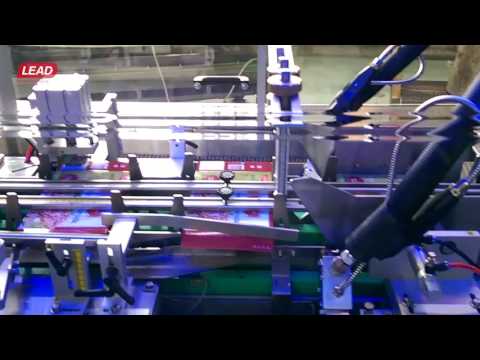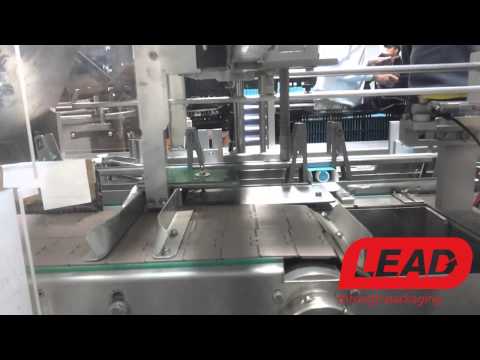
A viscous product does not flow into the filling vessel; it is forced in. This difference changes almost every component in a filling station: the filling method, nozzle diameter, discharge rate, and what happens when the flow is stopped. Filling stations designed for thin liquid and transferred to viscous paste create inconsistent doses, strings forming at the opening, and cycle times that stretch without a clear explanation. Proper design starts with the material behavior and not with the desired speed.
Why does viscosity change the filling mechanism?
Thin material reaches the filling station by gravity and disperses in the vessel on its own. Viscous material requires pressure, and it continues to move for a moment even after the mechanism stops. These two phenomena create the two well-known problems in filling viscous products: an inaccurate dose at the end, and material that remains hanging at the opening and drips onto the vessel wall or conveyor.
A filling machine for viscous products is therefore selected according to the material behavior at the end, and not according to the fill volume alone.
In addition, viscosity is not a fixed value. The same product behaves differently at different temperatures, so a line that works well in summer can create deviations in winter. In the design of filling machines for viscous products, it is important to describe not only the viscosity but also the range in which it is actually stable in the plant.
Which mechanism is suitable for pastes and viscous materials?
A piston-type volumetric filler is the accepted solution for liquids and pastes, because it displaces a fixed volume in each cycle and does not rely on free flow. In parallel, the machine structure determines how many stations can be added around the filling station, and this changes as required downstream operations such as disassembly, sealing, or applying a label to a product that must not be moved immediately after filling.
▪ A pressure-driven mechanism instead of relying on gravity flow
▪ Matching the opening diameter and discharge rate to the actual viscosity
▪ Control of flow stoppage to prevent a pulled material thread
▪ Designing the filling station for cleaning and for washing between products
▪ The temperature range at which the product is supplied
Filling machines for capping differ from one another also in the number of workstations that can be arranged around the filling station or along the conveyor. In a compact product, the operation after filling sometimes cannot be performed immediately, and therefore a filling line that allows spacing between stations provides a better solution than a crowded layout. This is especially true when sealing is required or when applying a label to a container that is still moving.
In practice, the component that usually receives the least attention is cleaning. A capping product remains on the walls after the run is finished, and the washing time between products can take up a significant part of the shift. A machine designed for easy disassembly and reassembly returns this time to production.
How does the container affect the solution?
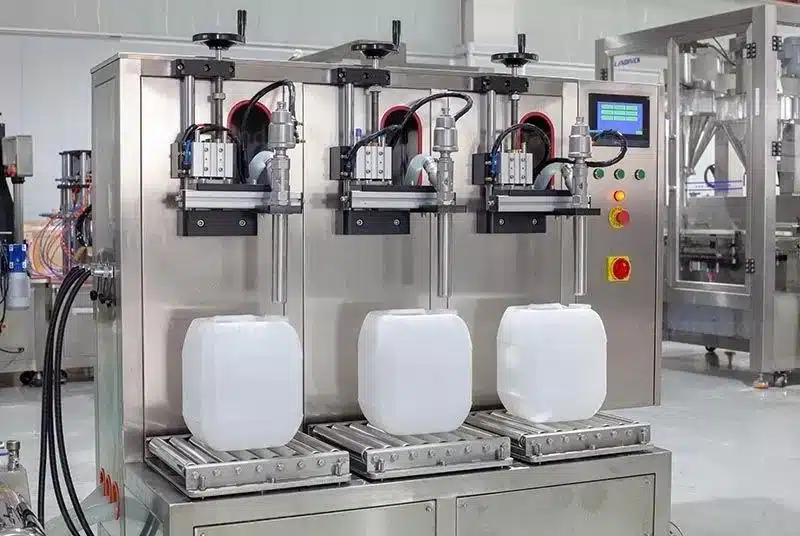
Filling machines for capping are designed around the container no less than around the material. A filling machine suited to a small beaker is not necessarily suitable for a drum, and not only because of the volume: the weight of the full container, the way it is held during filling, and the distance of the spray bar from the bottom all change completely. A filling line that must handle both types of containers requires an early decision as to whether it is a single flexible station or two separate stations.
A capping product in a small beaker and a capping product in a large-volume drum are two different engineering problems. In a small container the challenge is dosing accuracy and preventing material from spilling over the rim, while in a large container additional full load weight, longer filling time, and the question of container stability during the process are introduced. Hence throughput is measured differently as well: the number of containers tested in a small container versus the cycle time per container in large volumes.
Container type | The central challenge | What is tested in the characterization |
In beakers and in jerrycans | Precise dosing and prevention of residue buildup in the closure | Closure torque and release rate |
Wide-neck nozzles | Uniform distribution and product appearance in the nozzle | Cap position and filling height |
Drains | Full weight and refill duration | Container stability and sealing station |
Large jerrycans and containers | Fill and empty time from the line | Number of work stations along the conveyor |
Sprayers and sauces | Small cartons and clean filling | Cleaning the sealing area |
What does Impac offer in this field?
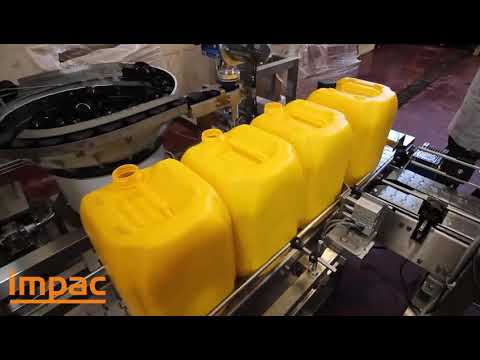
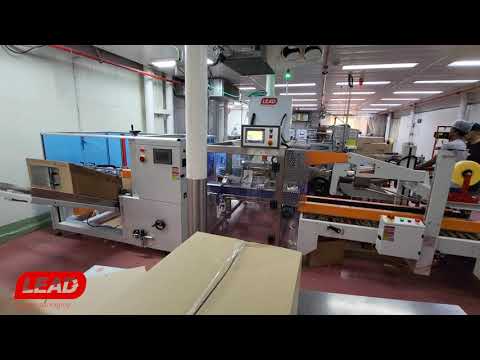
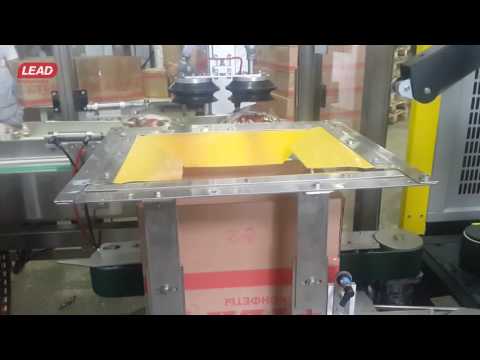
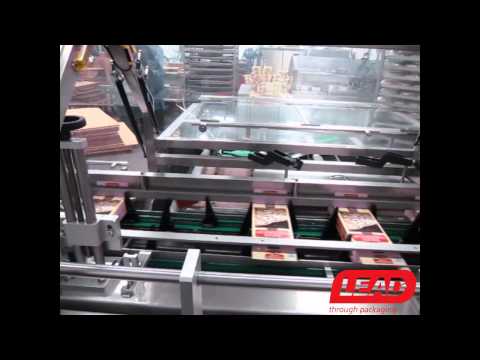
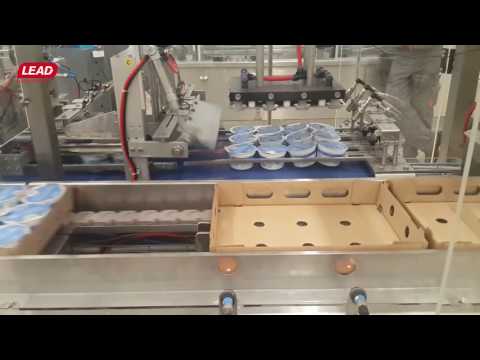
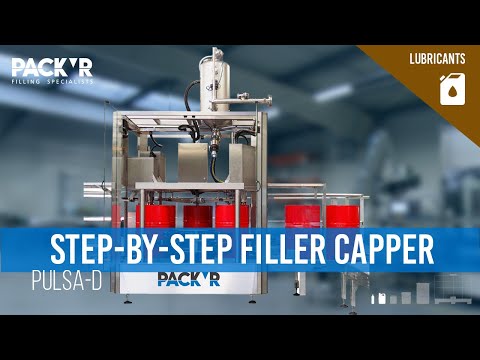
Impac designs the line around the product behavior, not around an existing model, and this is especially evident in sleeves. The automatic line for filling, de-nesting and applying sleeves onto jerrycans and containers is built in a linear structure that allows work stations to be added as required, handles a wide range of low-viscosity to viscous materials across different sleeve sizes, and can reach 5,000 to 25,000 containers per shift. Its applications include grinding, ribbons, chocolate, oils, fuel additives and chemicals.
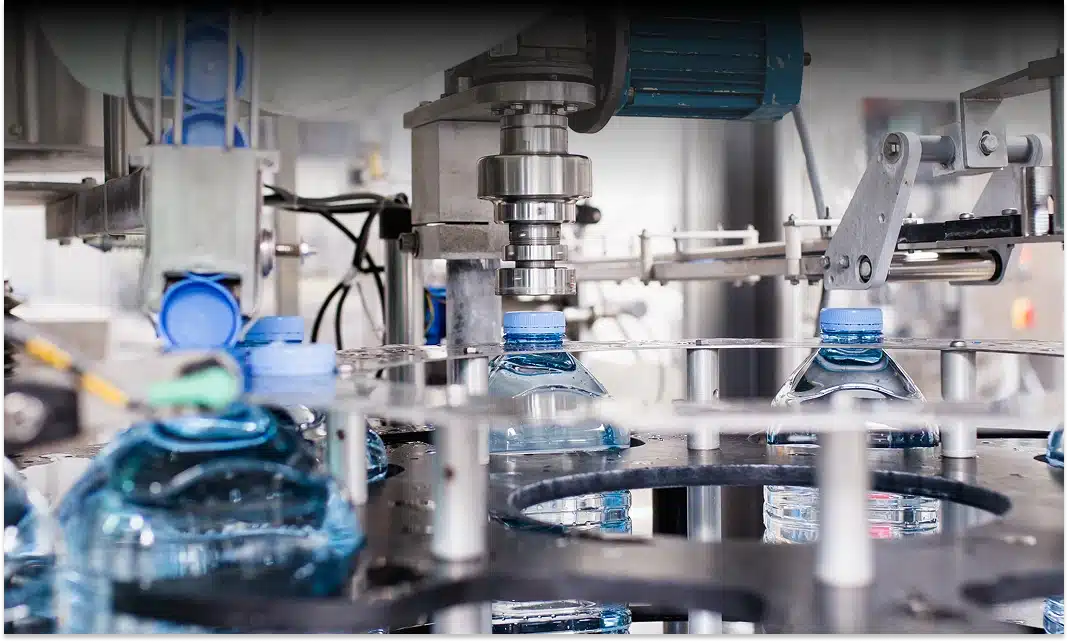
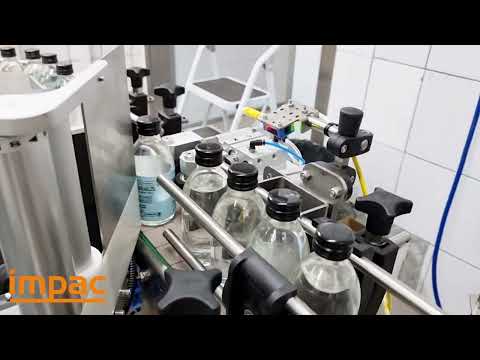
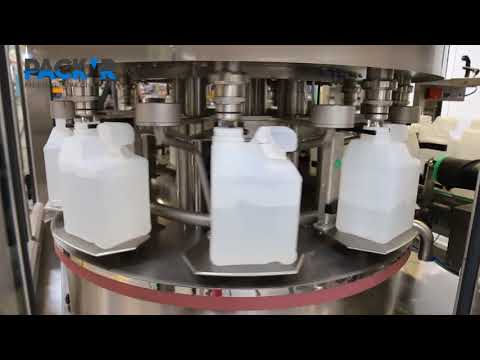
In parallel, the filling machine for bottle liquids combines a rotary structure with a linear conveyor and is suitable for low-viscosity, semi-viscous and viscous liquids. This combination makes it possible to position work stations both around the turret and לאורך the conveyor, which is required when a filling product involves immediate downstream operations after filling.
What happens before the filling station?
In sleeve products, some of the problems that appear at the filling station originate upstream. A storage vessel in which the material is not cooled uniformly, a pump that feeds at variable pressure, or a feed line that is too long all change the product behavior by the time it reaches the bottle. Therefore, the characterization of sleeve filling machines examines the entire path of the material from the tank to the nozzle, and not just the filling station itself.
In addition, there are products that require mixing or controlled heating before filling in order to maintain uniformity. In such cases the preparation station becomes part of the line and not a separate module, and it should be designed together with the machine. When the preparation and filling are designed separately, the gap is revealed in deviations that are difficult to attribute to the source.
How is throughput evaluated in a sleeve filling line?
A sleeve product fills more slowly than a low-viscosity liquid through the same nozzle diameter, and therefore the filling rate is not determined independently but is the result of a combination of the material, the nozzle opening and the pressure. Increasing the rate beyond a certain point creates spitting, wear and longer cleaning time, so throughput tends to drop דווקא when trying to increase it.
In practice, filling machines for jar products are selected according to actual machine performance, not peak output rate. The calculation includes filling time, changeover time between products, and the rinse time between them. A filling line that replaces a product twice a day will yield a completely different output than one that produces that same product continuously, even when the machine is identical.
Summary
Filling machines for jar products are selected according to the material’s actual behavior in operation: its viscosity, the range over which it flows, the type of container, and the cleaning time between products. The propulsion mechanism, flow stoppage control, and cleaning design are the three components that determine whether the line will provide a uniform output throughout a full shift. Consult Impac with the product data, viscosity, and container, and you will receive a suitable filling solution configuration.