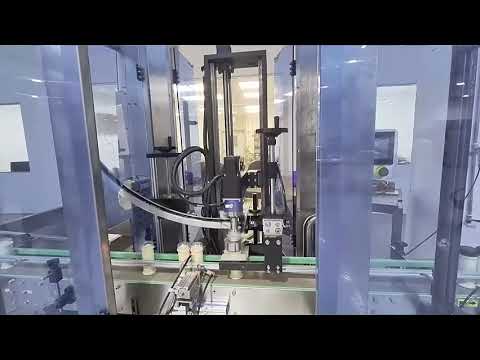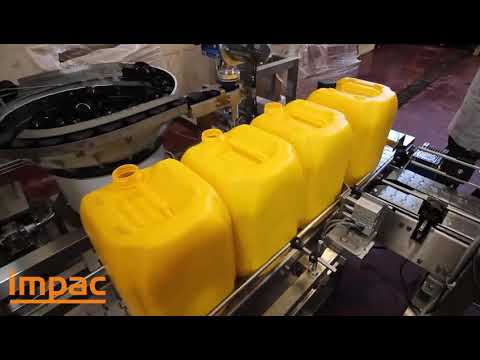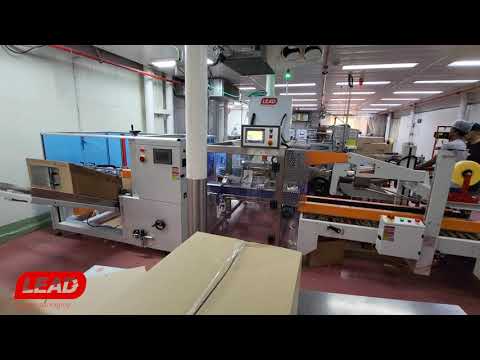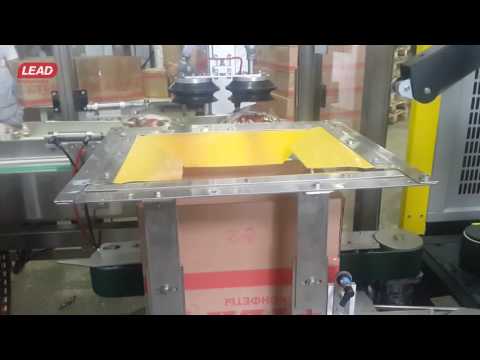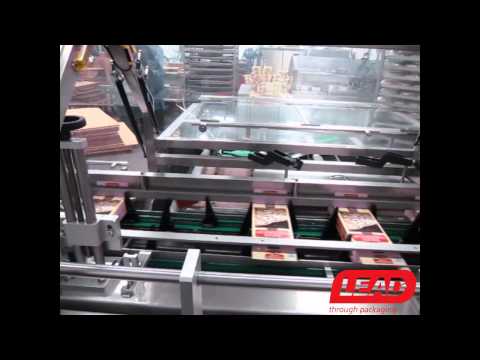
A pail filling line has to handle changes in product consistency without losing dose accuracy or leaving material around the rim. Paint is a good example. As its viscosity changes with temperature, the way it flows through the filling nozzle changes too. This can affect shut-off, create drips or strings, and leave inconsistent fill levels. When a pail line shows these symptoms, the cause usually lies in how well the filling method matches the product, not in the rated speed printed on the machine.
This guide follows the order in which most production teams face these decisions. We start with the product, move to the filling method, then look at closing, and finish with the equipment options for different production volumes. Where a result depends on the product or the line layout, we explain what to check.
Which Products Are Filled into Pails and Buckets
Pail filling equipment is used for products such as paints, coatings, lubricants, adhesives, sauces, creams and pastes. Since each product behaves differently, the filling equipment needs to suit its consistency and handling requirements.
Liquid, Viscous and Paste-Like Products
Two products that both look like liquids can behave very differently. Water runs freely, while a thick paint or paste resists movement. This resistance is called viscosity (the degree to which a fluid resists flowing). A higher viscosity usually requires more force, a wider flow path or a different nozzle to move the product through the system.
IMPAC supplies bucket-filling machines for food, cosmetics, paint, glue and chemical manufacturers. The right machine configuration for each application depends on the product’s behaviour during filling.
Why Product Characteristics Matter
Four product properties often affect filler performance:
- Temperature: Warmer products often flow more easily, while cooler products may thicken enough to slow the cycle.
- Foam: Air trapped in the product can distort the measured dose.
- Particles: Solid pieces can block a nozzle or settle in the supply line.
- Shear sensitivity (a product’s tendency to change its structure when pushed or pumped): Some products separate or thin under pump pressure.
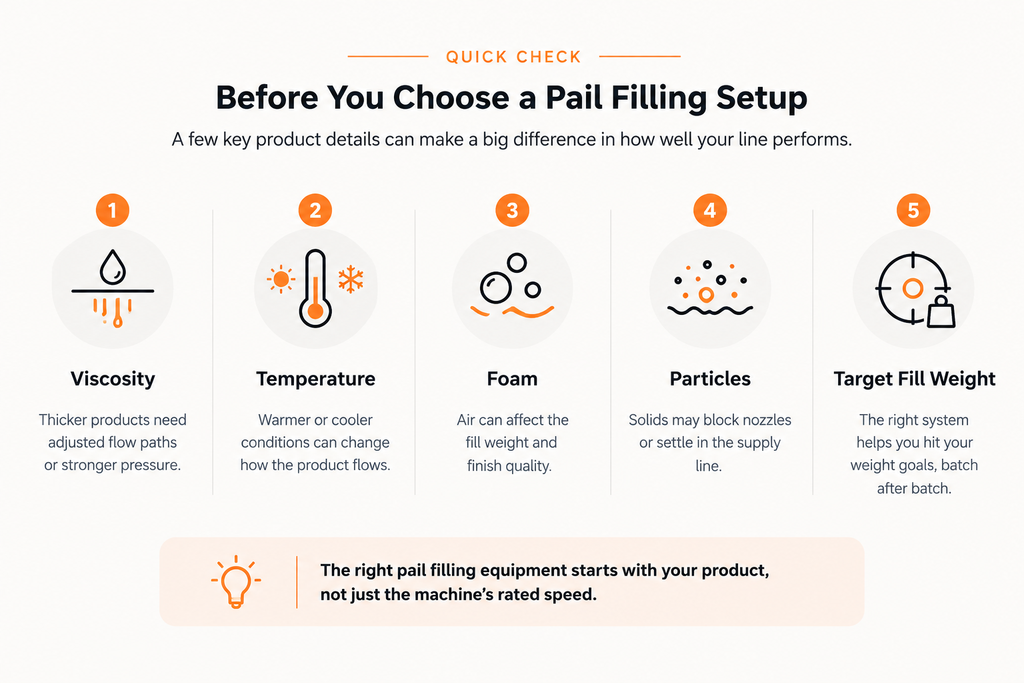
We do not recommend a machine based on a product category alone. A reliable selection starts with a trial using the actual formulation, at its expected temperature and target fill weight.
Common Problems on Pail Filling Lines
The table below lists the problems we see most often and the direction each solution takes.
Although the right pail filling equipment can help address some of these issues, the cause may also lie in product behavior, machine settings or the way filling connects with downstream packaging.
| Problem | Common causes | Potential impact | Solution direction |
| Inconsistent fill weights | Incorrect settings, calibration issues or variable product flow | Product giveaway, underfilled containers, rework and additional checks | Suitable dosing control, calibration and weight checks where required |
| Slow filling of viscous products | High resistance to flow, unsuitable nozzle or pump, or changes in product temperature | Longer filling cycles and difficulty meeting output targets | Select and test a filling system for the actual product and operating conditions |
| Drips or product on the pail rim | Product continues flowing after dosing, sticky material or unsuitable nozzle design | Product waste, cleaning work and potential closure problems | Suitable nozzle and shut-off arrangements, with settings tested for the product |
| Long changeovers and cleaning | Format adjustments, product residue or difficult access to product-contact parts | Downtime, additional labor and delayed production runs | Suitable changeover features, accessible components and an appropriate cleaning procedure |
| Lid placement or closing problems | Manual handling, misaligned lids or insufficient closing capacity | Rework, damaged packages, leakage risk and line interruptions | Compatible lid placement and closing equipment, with suitable checks |
| Filling line bottlenecks | Filling, closing and downstream stations operate at different rates | Queues, stoppages and lower finished-pack output than expected | Review the full line and coordinate filling, closing and downstream handling |
The example shows what these problems can cost. The figures in this example are for illustration only, not results from a specific customer.
Example:
The Cost of a Small Overfill
Suppose a plant fills 1,000 pails per shift and adds an extra 100 g to each one. That is 100 kg of product per shift. At a product cost of $2 per kilogram, the extra product costs $200 per shift. Across 250 comparable shifts, the plant would give away 25,000 kg, which is $50,000 in material.
Your product cost, fill target, variation and production schedule will change this figure. Treat it as a way to frame the question, not as a benchmark.
Note: This is a Hypothetical example:
Filling Methods for Pails: Piston, Gravity and Weight-Based
Two questions shape any filling method.
- The first is how the product moves through the system, such as by gravity, pump or piston.
- The second is how the dose is measured, either by volume or by net weight (the weight of the product alone, without the container).
These questions are related, but they are separate. A weight-based system describes how the dose is checked. It does not, by itself, describe how the product travels to the container.
| Method | Where it may suit | Issue it can help with | Limits to check |
| Piston filling | Products suited to positive-displacement dosing (a method that moves a fixed volume with each stroke) | Repeatable doses for thicker products | Particles, cleaning access, piston and nozzle design |
| Gravity filling | Products that flow readily under their own weight | Simple, direct filling | Thick products may fill slowly or unevenly |
| Pump-assisted filling | Products that need controlled movement from a tank or supply | Poor feed, difficult flow to the nozzle | Pump suitability, shear sensitivity, particles, temperature |
| Weight-based filling | Targets set by product weight | Overfilling, giveaway, fill-weight control | Calibration, product behaviour, container handling |
Piston Filling for Controlled Dosing
A piston draws a preset dose and pushes it through the nozzle. Because the stroke sets the dose, this approach can suit thicker liquids and pastes. Our semi-automatic piston filler uses this principle.
Gravity and Pump-Assisted Feeding
Gravity feeding works well when the product flows easily. For thicker products, a pump can move the product from a tank or supply system to the nozzle. The pump must suit the product, because shear, particles and temperature can change how the product responds to pressure.
Weight-Based Filling and Product Giveaway
Weight-based filling checks each dose against a target net weight. It can reduce the safety margin that plants add to avoid underfilling, provided the system is calibrated and containers are handled consistently.
Lid Placement, Pressing and Heat Sealing After Filling
Closing a pail involves three separate operations:
- Lid placement: positioning the correct lid on the filled pail.
- Lid pressing or closing: applying force or a mechanism to secure the lid.
- Heat sealing: bonding a compatible film or liner to the container using heat, which requires matched materials and settings.
Not every pail needs all three. The package design determines which steps apply. A press-on lid, for example, may not need heat sealing at all.
| Problem | Effect | Equipment or process | What to confirm |
| Manual lid placement | Labour demand, variable cycle time | Automatic lid feeding and placement | Lid types and dimensions the machine supports |
| Missing or misaligned lids | Rework, rejects, leak risk | Lid presence and position checks | Which checks the configuration includes |
| Closing slower than filling | Queues, stoppages | Integrated closing or lid pressing | Actual rate at the required pail size |
| Inconsistent seals | Leakage, compromised packs | Closure or sealing method matched to the pack | Material compatibility, validated settings |
| Tamper evidence required | Pack may not meet the closure requirement | Suitable sealing system | Whether the package and process provide tamper evidence (a visible sign that the closure has been opened) |
When Manual Lid Handling Becomes a Bottleneck
A plant can increase filler speed and still see little gain in finished pails per hour. If operators continue to place and press lids by hand, the queue moves to the closing station. In that case, the useful measure is the rate of accepted, fully closed pails.
Our integrated filling and closing system addresses this combined step, subject to the pail format and closure type.
Choosing a Closure or Sealing Method
Start with the package, not the machine. Ask which closure the product needs, whether the pack requires tamper evidence, and whether the lid material can be heat-sealed. Once those answers are clear, the closing method follows from them.
Matching Pail Filling Equipment to Production Volume
The right machine depends on how many pails you fill, how often formats change, how much labour is available and what the rest of the line requires. The table below shows where to begin.
| Production situation | Starting point | Reason |
| Low or variable output, operator at the filling station | Semi-automatic filler | Controlled dosing without automating the full line |
| High output, recurring pail format, significant giveaway | Automatic weight-based filler | Weight-based dosing and automated handling, subject to trials |
| Lid placement and closing take up significant time | Integrated filling, closing and sealing system | Improves more than the dosing cycle |
| Several pail sizes or frequent product runs | Compare changeover design, tooling and cleaning | Fit depends on how often formats change |
| Thick, stringy, foaming or particulate product | Product trial before selection | Viscosity alone does not determine compatibility |
These are starting points, not guarantees. Each of our machine types suits different conditions, so each configuration needs checking against the product and the line.
When a Semi-Automatic Pail Filler Makes Sense
A semi-automatic filler suits operations where an operator positions each container while the machine manages the dosing cycle. This arrangement fits smaller runs, variable schedules and plants that do not yet need full automation. Because the operator handles container placement, the set-up can accommodate frequent changes in pail size.
Our semi-automatic model should be assessed for pail formats, viscosity range, nozzle options and output against your requirements.
When to Consider High-Speed Automatic Filling
High-speed automatic filling suits sustained, high-volume production with a recurring pail format. Weight-based control helps address fill-weight variation and giveaway, and automated container handling reduces manual steps.
Speed figures change with container size, product and configuration. Confirm the exact model’s output and accuracy for your container and product before comparing it with other options. Our PACKER REVO-S machine belongs in this category.
Integrating Filling with Closing and Downstream Equipment
Integration involves more than physically connecting machines. Each stage must run at a compatible rate, and the controls must coordinate container movement, filling, closure and fault handling. A typical line includes four stages:
- Product supply: a tank, hopper or feed system suited to the product.
- Filling: dosing, fill-weight control and pail positioning.
- Lid placement and closure: lid feeding, positioning, pressing or a compatible sealing process.
- Inspection and downstream handling: checks, labelling, case packing or palletising where needed.
This is a conceptual layout. Your line may omit stages or arrange them differently.
Changeover, Cleaning and Product Compatibility
Frequent changeovers and cleaning can take more time than filling itself. Ask how format parts are changed, how many adjustments an operator repeats, and how product-contact parts are cleaned. Quick-change tooling and documented procedures can shorten changeovers. Where the configuration and product allow it, CIP can reduce manual cleaning. The cleaning method still depends on the product and its cleaning requirements.
Changeover and cleaning features differ between our models, so we recommend comparing them against the formats you actually run.
Your Next Step
To recommend a configuration, we need a few details about your operation: product viscosity and temperature, pail dimensions, target fill weight, expected output per hour, and a short description of your current line. A product trial gives the most reliable basis for a decision. For specific pail filling equipment, please contact our team of experts to confirm the upgrade options.
Frequently Asked Questions:
What bucket sizes can a single filling machine handle?
The supported size range depends on the model, the nozzle and the format parts. Pail diameter and height also affect container positioning and closing. For the exact range of the model you are considering, please contact our team of experts.
How do you prevent drips when filling thick products such as pastes or paint?
Drips usually come from flow that continues after dosing, the nozzle design, or how the product behaves at cut-off. Anti-drip nozzle arrangements and settings validated on your product can reduce this problem. Results depend on the product, so we recommend a trial with a sample.
Can the same equipment fill both powders and liquids into pails?
Liquids and powders usually need different dosing methods. Powders may need an auger (a rotating screw that meters material) or a powder-specific weighing system. Do not assume a liquid filler will handle powders. For your specific product, please contact our team of experts to confirm whether one configuration could serve both.
Can a semi-automatic pail filler be upgraded to an automatic line?
In some cases, yes. The answer depends on the original machine design and the automation you plan. Before deciding, we review whether the filler can accept automatic container infeed, connect to conveyors, add lid feeding or closing, exchange signals with other controls, and fit your floor space.