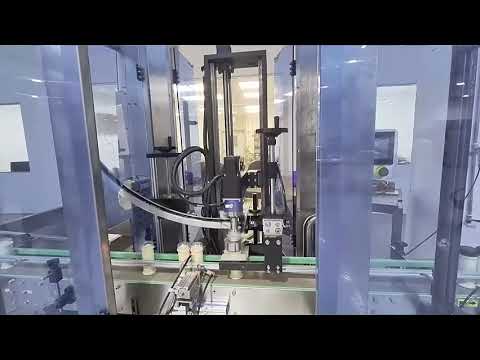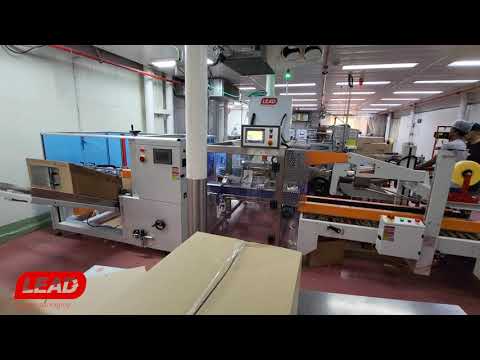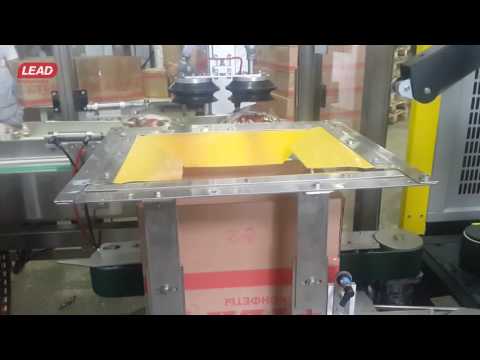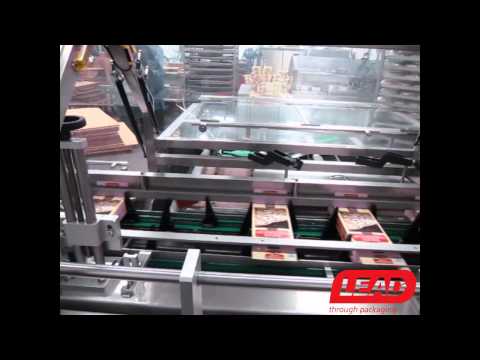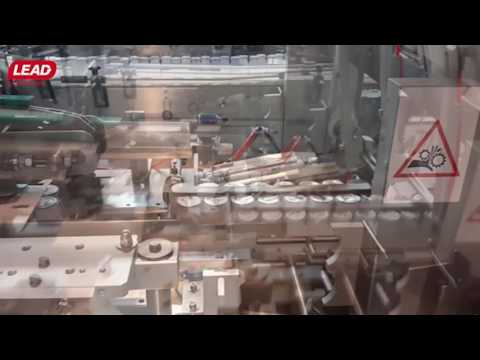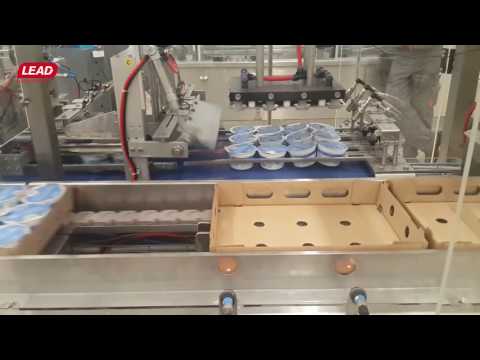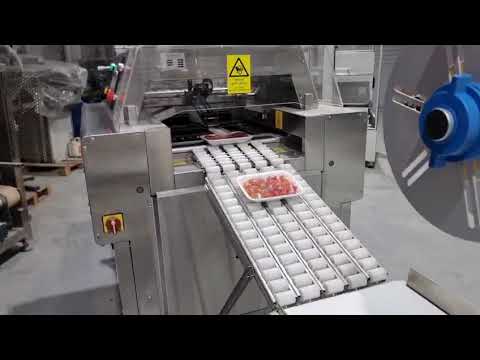
Rotary and inline cup fillers differ mainly in how cups travel. A rotary machine carries them around an indexing table (a circular table that pauses at each station before turning on). An inline machine moves them along a straight path. Either layout can handle yogurt, desserts, spreads and sauces. What separates them is floor space, the effort of changing formats and how easily the machine joins the rest of your line.
IMPAC offers two cup filling designs: the TYPHOON rotary cup filler and the MAMBA linear (inline) cup filler. This guide explains how each one works, so you can judge which of our cup filling solutions suits your product, your cup and your sealing method.
How a Rotary Cup Filler Works
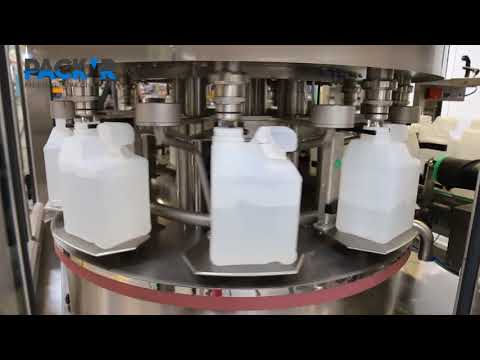
A rotary cup filling machine uses a rotating indexing table to move pre-formed cups through a series of processing stations. The table holds each cup in position and advances it from one station to the next, where operations such as filling, sealing, capping and labelling take place. The number and arrangement of stations depend on the product and the required packaging process.
Our TYPHOON is an automatic rotary filling and sealing machine designed for cups and jars. It combines filling, sealing, capping and labelling operations in a compact footprint. The filling system and additional stations are configured according to the product, allowing the machine to handle liquids, creams, powders, capsules and granular products.
The stations you need depend on the product, so the sequence below varies from one configuration to another.
Cup Feeding and Positioning
Pre-formed cups or trays arrive through an automatic feeder and settle into positions on the table. From there, the table indexes (advances one step) so that each cup meets the next station in turn.
Filling and Additional Dosing
The dosing unit is chosen to match the product. A piston filler (a cylinder that pushes out a measured portion) suits creams and liquids. An auger filler (a rotating screw that feeds powder) suits dry products, and a weighing device suits granules. The filling unit includes an anti-dripping system, and an optional net weight check with a rejection unit can remove any cup whose net weight falls outside the acceptable range
Some recipes call for a topping on top of the base. If yours does, tell us early. Added dosing stations are a configuration question for our engineers.
Sealing and Discharge
Sealing can use laminated film (a foil-based film made of bonded layers) fed from a roll, or pre-made lids. A nitrogen purge is optional. It replaces air in the cup with nitrogen before sealing, which may help extend shelf life. Capping uses torque control (a set tightening force) with a check that each cap is present. Labelling, coding and a discharge conveyor can follow.
How an Inline Cup Filler Works
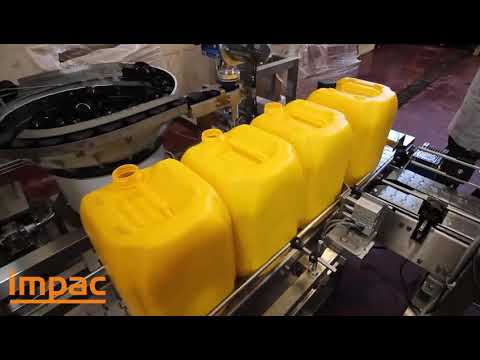
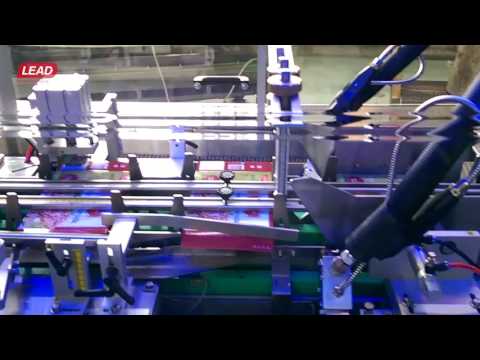
An inline machine moves cups forward along a straight line, and the stations are arranged one after another. Our MAMBA is an automatic inline machine for filling, closing and sealing cups. Built around a straight-line configuration, it moves containers between stations using a servomotor (a motor that positions containers with precision). The machine is tailor-made for each customer’s product and can handle cups, pails and jerrycans. It accepts filling systems for liquids, creams, powders and granular products.
Cup Denesting
Denesting means separating single cups from a stack. In an inline arrangement, feeding systems and unscramblers (devices that orient loose containers) sit ahead of the core machine. They place each cup in a holder on the carrier, ready for filling.
Filling Along the Conveyor
Cups pass beneath the filling heads. The MAMBA runs one or two lanes (parallel rows of cups), and it can combine several filling systems when one product needs more than one dosing method. Two lanes can raise the number of cups handled in each cycle. They do not suit every product, so we size the lane count to your recipe.
Lid Placement and Discharge
Sealing from a laminated film roll is optional, as is a nitrogen purge. Capping uses the same torque control and cap presence check as on the TYPHOON. Labelling, verification systems and end-of-line equipment such as case packers can be connected after the machine.
Output, Footprint and Format Changes Compared
When comparing a rotary vs inline cup filling machine, the layout does not determine the filling method. A rotary machine and an inline machine can both carry a piston, auger or weighing unit. The flow of the product, any particles in it and the portion accuracy you need should guide that choice.
Production Output
Neither layout is faster by nature. A multi-lane inline machine can process more cups per cycle, and a rotary machine can be designed for high output as well. Real output depends on cup size, fill volume, product flow, sealing time and the number of lanes.
Available Floor Space
Our TYPHOON is designed for a minimal footprint, because its stations wrap around one table. An inline machine tends to need more length as stations are added. A short inline setup can still fit a small room, while a large rotary line can use a good deal of floor, so layout drawings are worth reviewing early.
Changing Cup Formats
Moving to a different cup diameter, shape or height may call for new holders, guides or sealing tools. The MAMBA is built for easy format conversion across package types. The TYPHOON offers quick-adjustment parameters, which speed up product changes. A recipe change and a physical cup change are different jobs, so please tell us your full list of formats.
Rotary vs Inline Cup Filling Machine: Key Differences
| Consideration | Rotary layout (TYPHOON) | Inline layout (MAMBA) |
| Cup movement | Cups travel around an indexing table | Cups advance along a straight path |
| Station arrangement | Stations sit around the table | Stations follow one another along the line |
| Floor space | Compact for a suitable configuration | Often longer as stations and lanes increase |
| Extra operations | Capping, labelling, coding and nitrogen purge | Capping, labelling, verification and end-of-line equipment |
| Format changes | May involve holders, feeding parts and sealing tools | May involve carriers, guides and sealing tools |
| Typical fit | Several operations in one compact machine | A straight-through process joined to a longer line |
These points describe tendencies, not rules. The right starting point is your product and your packaging. Once those are clear, the layout usually follows.
Sealing Options: Heat-Sealed Foil, Snap-On Lids or Both
Heat-Sealed Foil Lids
Cup heat sealing uses heat and pressure to bond a foil or film lid to the cup rim. Its sealing layer (the inner coating that melts and fuses) must suit the cup material. Foil made for a polypropylene cup may not bond well to another plastic. This closure is common for yogurt, desserts and similar products where a peelable seal is wanted. Aluminium-based lidding can also act as a barrier against light, moisture and oxygen, depending on its construction.
Snap-On Lids
A snap-on lid presses over the rim and can be opened and closed again. It protects the contents during handling, but it is not a hermetic seal (an airtight seal). It suits dips, spreads and larger portions that a consumer may reopen. Our machines apply heat-sealed film or pre-made lids and torque-controlled caps. If you plan to use a snap-on lid, please ask our team of experts whether the chosen machine can apply it.
Using Both Closures
A cup can carry a heat-sealed foil as the primary barrier, with a snap-on lid above it. The cup must be designed for both closures, and the machine needs equipment to feed and apply each one. Our TYPHOON offers film or pre-made lid sealing along with capping options. Whether a given setup combines the two operations is something we confirm for each project.
Matching the Lid to the Cup
A good seal depends on the full cup and lid pairing. Before choosing, check:
- The cup material and the design of its rim
- The lid material and its heat-seal coating
- The product temperature at the moment of sealing
- Whether product residue reaches the rim
- The barrier and shelf life you need
- Whether the consumer expects a peelable or a reclosable pack
Validate the seal with your actual cup, film and machine.
Talk to Our Filling Experts
We can review your product, cup material, format changes, sealing method and the output you need, then recommend between our TYPHOON and MAMBA. Contact IMPAC for a consultation, and one of our filling machine experts will help you shape the right cup filling setup.
Frequently Asked Questions
Can one machine run several cup sizes?
Yes, within the range of the chosen design. Our MAMBA is built for easy format conversion, and the TYPHOON adjusts quickly between products through its control settings. A new cup diameter or height may still need changing parts such as holders or guides. Please send us your cup range, and our team of experts will confirm what each machine can handle.
How is hygiene maintained when filling dairy products?
On our TYPHOON and MAMBA, every product-contact part is made of stainless steel, FDA-approved polymer made for food. The filling system comes apart and goes back together easily for daily clean-up, and both machines are built to withstand frequent washing. An anti-dripping system helps keep the cup rim clean, which supports a good seal. Protecting empty cups and lids before sealing also matters. For cleaning-in-place (CIP, automated cleaning without disassembly) or aseptic filling, please contact our team of experts, as the answer depends on the exact configuration.
Which cup materials can be heat sealed?
Polypropylene, polystyrene, PET and coated paper cups are common choices. The sealing layer of the lid must match the cup’s rim material. Our machines seal from a film roll or with pre-made lids. For the cup materials suited to your configuration, please contact our team of experts.
Which products are hard to fill into cups?
Thick, chunky, foamy or particle-filled products need the most care. Honey and dense spreads resist flow, so they may call for a positive-displacement system (one that pushes out a fixed volume). Fruit yogurt and chunky sauces need a filler that passes particles without crushing them. Mousse can foam, so nozzle movement and speed matter. Our TYPHOON handles liquids and creams of many viscosities, both uniform and non-uniform, and accepts filling systems for powders and granular products. Send us your product, and our team of experts will recommend a dosing method.