The first packaging conversation with a supplier begins with the same question: exactly what are you packaging, and at what rate. In many plants, the answer exists בראש of the production manager but is not written down, and so the selection of a packaging machine begins with partial data. This gap is revealed later, when it turns out that the chosen machine is suitable for only one product out of five running on the line. The way to reduce this is to build the packaging specification before approaching the supplier, not during the process.
What do you need to know before you inquire about a machine?
Packaging starts with three data points that determine almost everything: what goes into the package, what the final package shape is, and at what rate the line must operate throughout the shift. Around them, a second layer of operational data is built, which affects cost and actual throughput at least as much as the machine itself.
▪ The product shape, weight, and sensitivity to pressure during the loading stage
▪ The final package type: cardboard box, shrink wrap, tray, or Master carton
▪ The number of formats that will run on the same machine, and the frequency of changeovers between them
▪ The required throughput in a full shift, not just the peak momentary rate
▪ Downstream stations on the line: bundling, weighing, labeling, and palletizing
In this list, the item people are most likely to skip is the number of formats. A factory that produces one product can focus the choice on speed, whereas a factory that produces ten products in different sizes will gain more value from flexibility. The two requirements lead to different solutions, and sometimes to different models within the same machine family.
How does the package type determine the machine type?
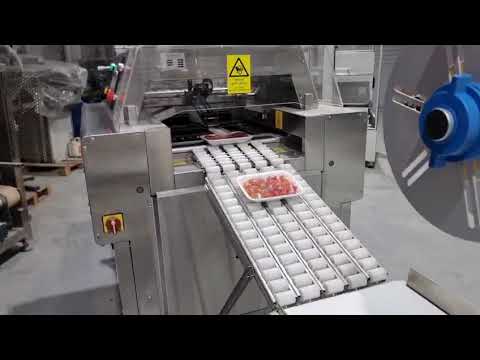
The practical classification in the packing machine catalog is not by industry but by the type of packaging the machine produces. Cartonetta builds a cardboard box and loads the product into it, wraparound applies a number of units in a single band for bundling, a Master case packer builds or fills a master carton, and a Flowpack horizontal packaging machine wraps a single product in a roll-fed bag. The table below maps the basic correspondence and serves as a starting point for discussion with the process engineer.
The final packaging | Machine type | Impac catalog models |
Standalone carton box | Horizontal Cartonetta | MKH-4, MKH-3 |
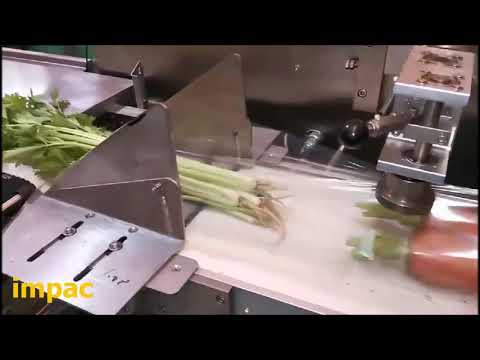
Roll-fed bag for a single product | Flowpack horizontal packaging | For fruits, vegetables, chocolate and bread |
Bundling of units in wraparound | Stacking wraparound bundler | MP-50, MP-10, MP-70 |
Master case packer for shipping | Case packer and palletizer | CW-01, 68-FD |
Carton feeder | Carton feeder setup and packing into it | TL-01, TP-01 |
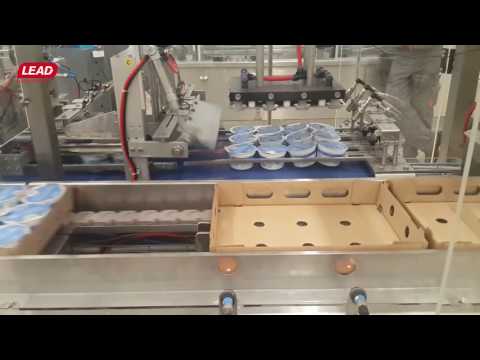
Automatic tray loading | Pick and Place in servo drive | PK-01 |
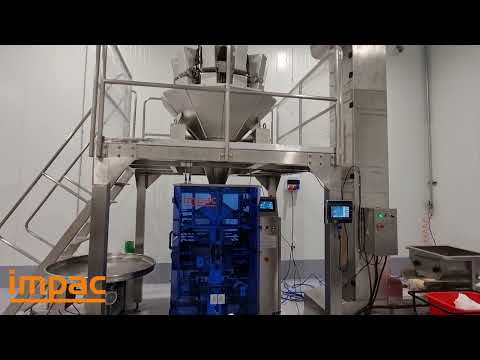
In practice, a complete line combines several of these machines in sequence. A single product is packed in a carton, tied in shrink wrap and inserted into the master carton, and every transition between stages is a point where manual handling can be eliminated or a new bottleneck can be created. Therefore, the choice is not a standalone machine but a line.
Why is throughput in a shift more important than the peak rate?
Peak rate is measured under laboratory conditions, with a single product and no interruptions. Shift throughput measures what actually comes off the line, and the difference between the two is made up of format changeovers, cleaning between products, feed interruptions, and short stoppages that are hard to see in a brochure. A packaging machine that reaches a high rate but requires a long setup at every changeover can produce less in a shift than a slower machine that changes formats quickly.
In addition, the machine rate is limited by the rate of the station before it and the station after it. There is no point doubling the speed of the bundling station if the upstream loading station does not supply the product at the same rate. In an automatic packaging line, the deciding factor is the rate of the slowest machine in the line.
What is actually checked in the interface between the machine and the existing line?
A new machine is inserted into a line that is already operating, so part of the focus is on the boundaries rather than on the machine itself. The infeed and outfeed conveyor heights, the infeed rate that the previous machine can supply, the clearance around the machine needed for operation and cleaning, and the control interface with the existing line controller all determine whether the installation is a simple hookup or an engineering project.
From an operational standpoint, it is also worth checking how much the machine allows for future changes. The MKH-4 carton feeding system can be separated within one second, which makes it possible to connect feed changes without touching the machine body. Such a feature may seem marginal in the specification, but it becomes significant on the day a new package size is added to the recipe.
Where does the custom fit come into the picture?
Some of the parameters are answered by the catalog model, and some are not. A product with an unusual shape, a carton that was closed by the sales team without checking mechanical feasibility, or a line with no physical space for a standard-size machine lead to a tailored solution. Impac has been designing and manufacturing packaging machines since 1974, and each project is built from the final package backward into the line, so the machine is designed around the product rather than the other way around.
This approach is also evident in existing models. The CW-01 packer works with Harness, 5-panel, and wrap around cartons, and can reach a rate of up to 20 cartons per minute depending on the product and size. This range is not a limitation but the result of adaptation: the same machine family covers very different carton formats.
In addition to the physical interfaces, it is worth defining in the specification what happens when the line stops. Automatic packaging machines integrated into a continuous process need to know when to wait if the upstream machine has been blocked, and when to resume operation without manual intervention once the blockage is cleared. Early definition of this behavior prevents unnecessary stoppages in the first weeks after installation, and avoids a situation in which the operator manages two control systems in parallel.
An additional consideration that often tips the scales in its favor is routine maintenance. A machine that is accessible from all sides, whose feeding components can be easily dismantled and cleaned without extensive disassembly, requires less downtime over the years of its operation. This parameter does not appear in the technical specification, but it is felt every week, so it is worth asking, in the tender, where the technician stands during maintenance and which operations can be performed without dismantling.
How do you compare the accepted proposals?
When several proposals arrive, the comparison tends to focus on price and rate, because it is easy to put those two numbers side by side. In practice, the real difference between proposals is usually found in what is included: the number of format parts, changeover stations, drive configuration, and team training. A cheap proposal that does not include format parts for all products in the quotation becomes more expensive already in the first year.
Therefore, it is worth building a comparison table in which each proposal is converted to the same scope of work. A packaging machine that comes with parts for three formats and a machine that comes with parts for one format are not the same product, even if their technical specifications look identical. The same principle applies to service and spare parts availability לאורך the machine’s life.
Summary
Choosing a packaging machine starts with a structured specification, not with catalog comparisons. The final packaging determines the type of machine, the number of formats determines the flexibility requirement, and line throughput determines whether the solution meets the target. Contact the Impac engineering team with your product data, packaging, and throughput, and receive a configuration of the solution best suited to your production line.