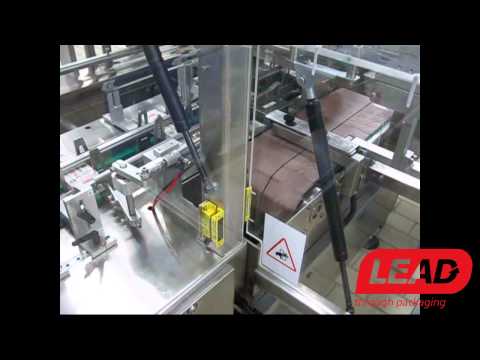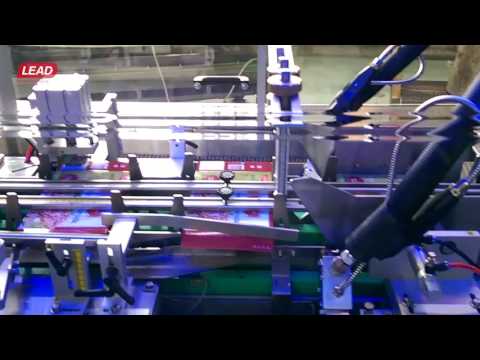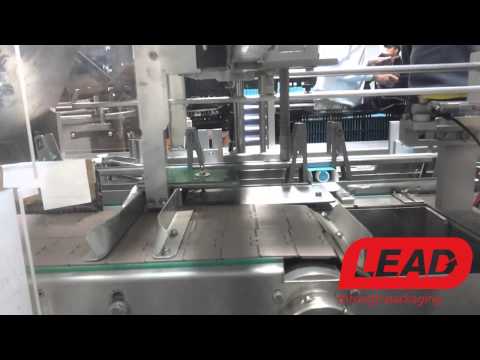
Beverage producers group bottles and cans before they ship them to retailers and distributors. This grouping step is called secondary packaging. It is the packaging that holds several primary containers, such as individual bottles or cans, together. The format chosen here affects material cost, line speed, the appearance of the retail pack and the effort needed to change between products.
Beverage packaging machines cover several end-of-line formats. This article explains those formats, how bottles and cans are grouped, the difference between cardboard and shrink film, and where secondary packaging sits in the line after filling. Filling itself is not covered here.
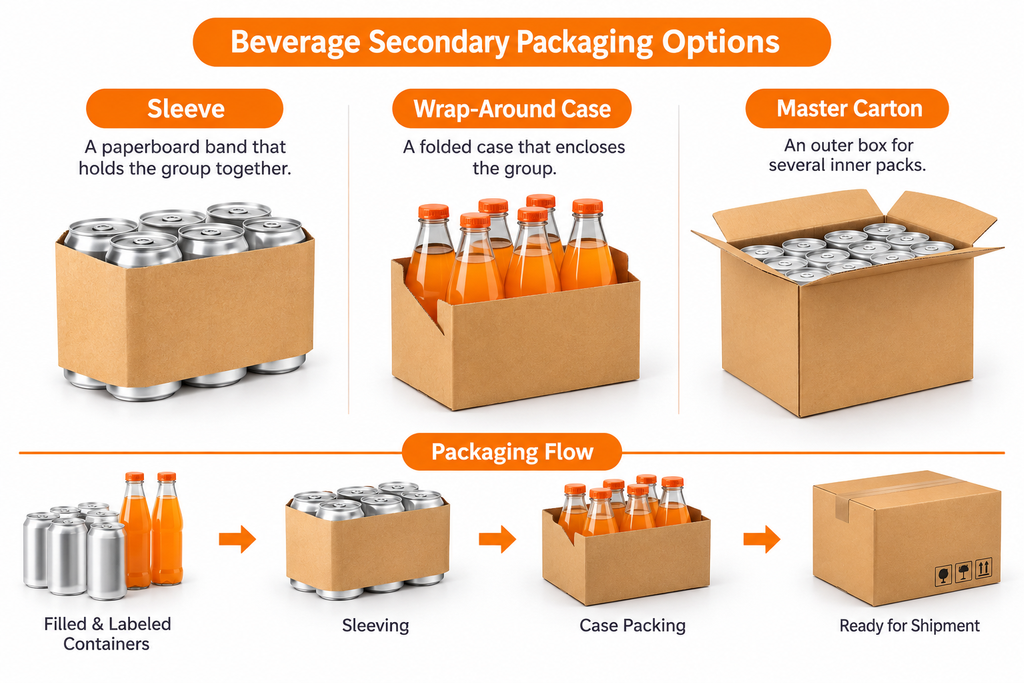
Secondary Packaging Formats: Sleeves, Wrap-Around Cases and Master Cartons
Beverage carton packaging machinery covers different formats for grouping bottles and cans, including sleeves, wrap-around cases and master cartons.
A sleeve is an open-ended paperboard band placed around a group. The top and bottom stay open, so the sleeve holds the group together without enclosing it. Sleeves suit common multipack counts of cans and bottles.
A wrap-around case is a blank that is folded around a group and closed at the line. It encloses the group more fully than a sleeve and is often used for larger counts.
A master carton is an outer box that holds several inner packs or cases for shipment.
| Format | Typical use | Machines in our range |
| Sleeve | Multipacks of cans, bottles or glass containers | MP-70 (intermittent), MP-10 and MP-50 |
| Wrap-around case | Larger groups formed and closed at the line | CW-01 wrap-around case packer |
| Master carton | Outer shipping box for several inner packs | FD-68 master carton machine, with PK-01 for loading |
The right format depends on the group count, the container shape, the handling conditions and the shipping method.
Grouping Bottles and Cans Before Packing
Bottles and cans differ in shape, weight and stability. Cans are light and have a uniform diameter. Glass bottles are heavier, have necks that can catch on guides and may rock when they are not upright. Grouping must account for both. Key factors include the pattern of rows and layers, the spacing between containers, the orientation of labels and the condition of caps.
Labels and caps should be fully set before containers reach the grouping station. Wet labels or loose caps can mark neighboring containers or cause jams at the infeed. Consistent spacing at the infeed also matters, because gaps and bunching produce misaligned groups.
Several of our sleeving machines list bottles and cans among their applications. The MP-10 uses a dual-belt or star-drive feed that feeds containers according to the required rows and units, and its eight motors are servo-driven. The MP-70 is an intermittent machine with pick-and-place, side-pusher and rotary side-pusher feeders. It can form two-, three- and four-side packs, with one or two rows and one or two layers. The MP-50 is a continuous bundler that can handle beverage bottles, glass containers and cans, and also adapts to different product shapes and sizes.
Cardboard vs. Shrink Film in Beverage Multipacks
Cardboard offers a large printable surface and uses less plastic than film. Paperboard can also enter paper recycling streams in many regions, although that depends on local collection rules. Shrink film holds a group tightly, protects it from dust and moisture on the outside and keeps the group stable without a rigid board. Each format suits different distribution conditions.
Chilled beverages create condensation on the containers and the packaging. Paperboard can soften when it becomes wet, which can weaken a sleeve or case. Coated board, a different closure method or testing under chilled conditions can reduce this risk. Samples should be tested under conditions that resemble the real storage and distribution cycle.
Placing Secondary Packaging After the Filler
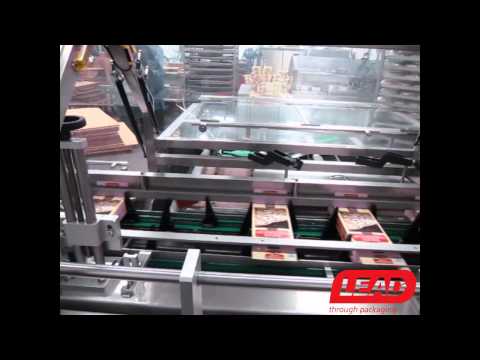
In a typical beverage line, containers are filled, capped and labeled before grouping begins. The grouping and packing stages receive containers at a steady rate, form the group and move it to a case, carton or sleeve station.
The rates of the upstream and downstream machines must match. If grouping runs faster than filling, groups accumulate at the infeed. If grouping runs slower, the filler backs up. Buffers and conveyors absorb short variations, and the infeed rate should be the design basis for the packing stage.
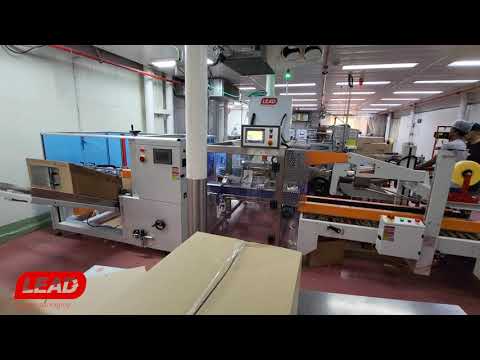
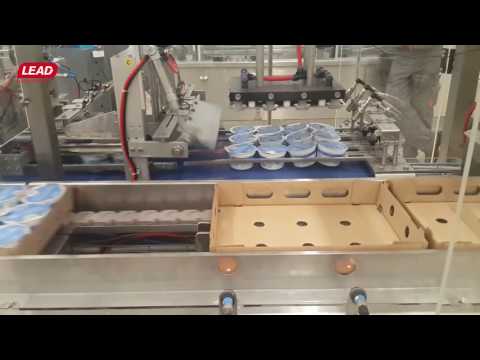
At the end of the line, the CW-01 is a fully automatic wrap-around case packer. It picks a corrugated blank from its magazine, forms the case, loads the grouped product and seals the case. It offers an open flap detection option and servo-driven feeding. The FD-68 is our master carton packaging machine. Its product page describes a wide range of carton sizes and product types, with quick adjustment to line changes. The PK-01 is a servo-driven pick-and-place system with two or three axes, which can load products into a master carton or case. Its applications include cans, so bottle loading should be confirmed for each configuration.
Talk to Our Team About Your Beverage Secondary Packaging
Share your container type and size, the group configuration you need, the sleeve or case dimensions, the infeed rate and your target output through our contact page. Our team will review the application and recommend a suitable setup. Contact us to arrange a consultation.
Frequently Asked Questions
Can one machine pack both cans and bottles?
Some sleeving machines may handle both types of containers among their applications, including the MP-10, MP-50 and MP-70. Changing between cans and bottles often requires different guides and infeed settings, and a substantial change in container shape may require different machine parts. Share your container dimensions with our team to confirm the changeover.
Which pack configurations are most common for beverages?
Common beverage groups include four, six, twelve and twenty-four units. These are arranged in two or three rows and one or two layers. Arrangements vary by market, container size and retail format, so the group pattern should be confirmed against your product drawing.
How much floor space does a wrap-around case packer need?
Floor space depends on the case size, the infeed length, the magazine length, the discharge conveyor and the space needed for service access. No single figure applies to every installation. Send a layout drawing of your line, and our team will review the footprint.
Is cardboard multipack packaging recyclable?
Paperboard is accepted in many paper recycling streams. Recyclability depends on local collection rules, the board grade, any coating, the glue and the print. Check with your local waste collection service and your packaging supplier before printing recyclability claims on the pack.