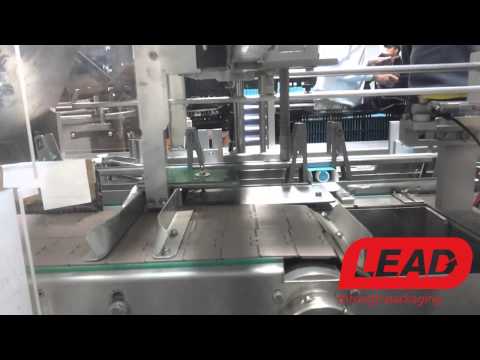
Two machines can fill the same vessel and achieve a completely different result at the end of the shift. The difference is not in build quality, but in what exactly is being measured: a fixed volume in each cycle, or the weight that is actually filled into each package. Volumetric filling machines and gravimetric filling machines were designed for two different material behaviors, and the choice between them is determined by the product long before it is determined by the budget.
What does each method actually measure?
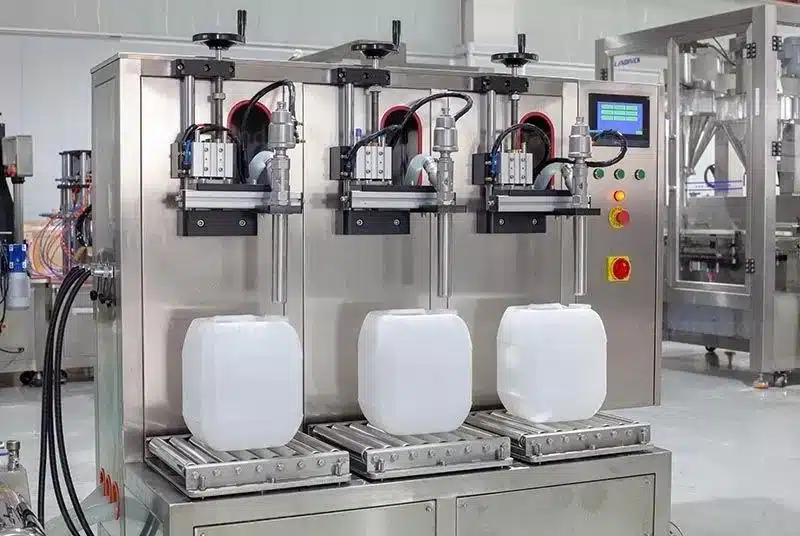
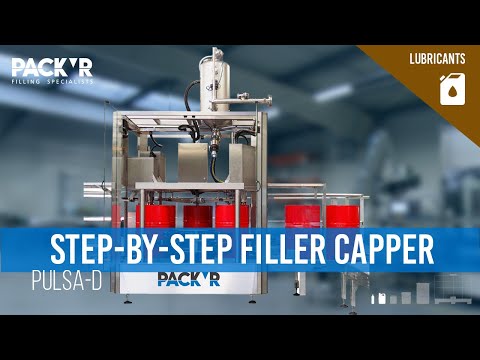
Volumetric filling measures a fixed volume in each cycle. A piston mechanism pushes the same amount of material every time, so the weight entering the package depends on the material’s density at that moment. As long as the density is stable, fixed volume translates to fixed weight.
Weight-based filling, also known as gravimetric filling, measures the actual weight before the filling material is released into the package. It makes no assumptions about density; it measures the result, and therefore handles better materials whose density changes from batch to batch or during the shift.
How do you check whether the product’s density is stable?
This is the practical question that determines the choice, and it is not always asked. Materials whose density changes generally include dry blends that segregate by particle size, powders that settle during waiting, products that entrain air in the mixture, and materials affected by temperature. In each of these cases, fixed volume will produce variable weight.
▪ A mixture containing several grain sizes and segregating in the storage tank
▪ Powder that compacts by itself while standing between shifts
▪ Product that traps air during mixing or pumping
▪ Material whose viscosity and density change with temperature
▪ Granular material in a distribution that comes from different supply sources
In practice, it is worth considering a series of samples from the existing batch before the pattern. If the actual weight varies over a wide range even though the fill is identical, that is a clear sign of a weight issue. If the weight is stable, volumetric filling offers a simpler mechanical solution.
What changes when replacing a product?
The difference between the methods is also felt in day-to-day operation, not just in accuracy. A line that switches between different blends based on volume requires recalibration on every changeover, because the same volume represents a different weight in each product. The weighing system is switched to the recipe of the next product through the controller, without physically recalibrating the mechanism itself.
From an operational standpoint, this means a machine that alternates products occasionally can benefit from the weighing method twice: both in accuracy and in setup time. A machine that produces a single product continuously will not usually feel the second advantage at all.
Product condition | Filling mechanism | What it means on the line |
Liquids and pastes | Piston-type volumetric filling | Fixed volume in each cycle |
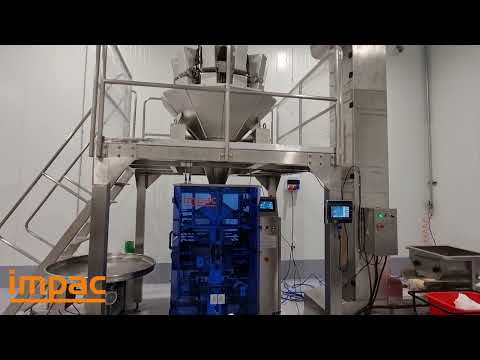
Products whose density changes | Weigh-based filling | Measurement based on actual weight |
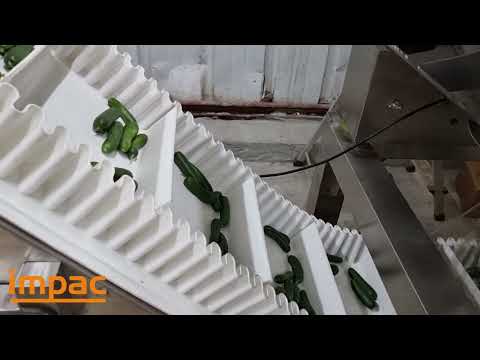
Dry granular or powder materials | Weighing with filling on an inclined conveyor | Controlled filling without dispersion |
Delicate powders and granules | Impac carousel, filler hopper | Accurate dosing for bags or sacks |
Clumping and airborne dust at full rate | Multi-station linear configuration | Continuous filling, closing and labeling |
What else affects the choice besides the product?
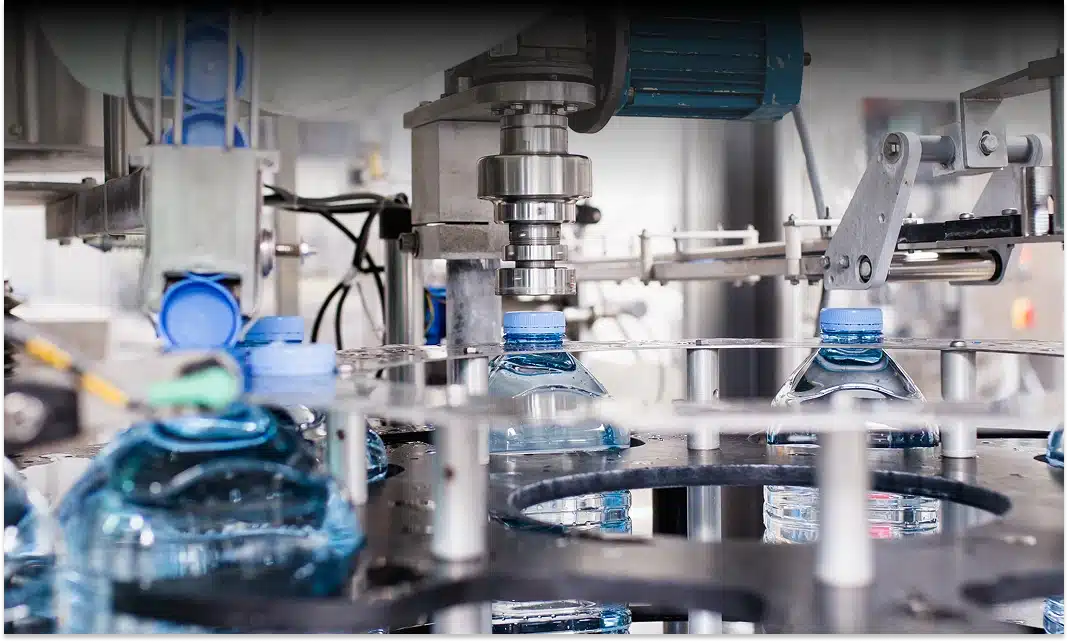
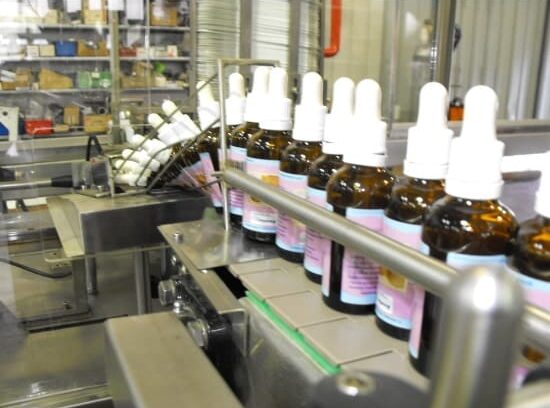
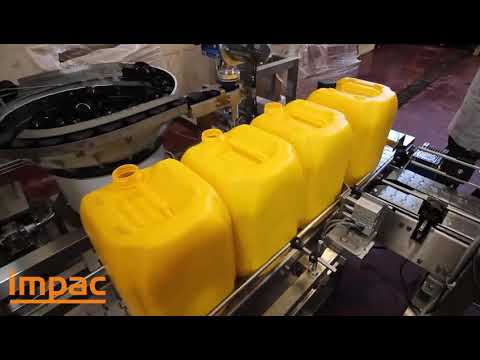
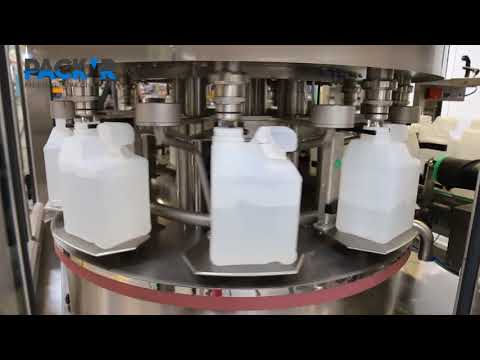
The type of container and the required output are also part of the decision. In a small bottle, a 10-liter jerrycan and a wide-mouth pail, it is obvious that the filling station structure will be different, and so will the number of formats that will pass through the same machine. In addition, there is a structural division: in a carousel configuration, the containers move smoothly on a rotating table and the work stations are arranged around it, whereas in a linear configuration the containers move along a straight conveyor and stations can be added along its length.
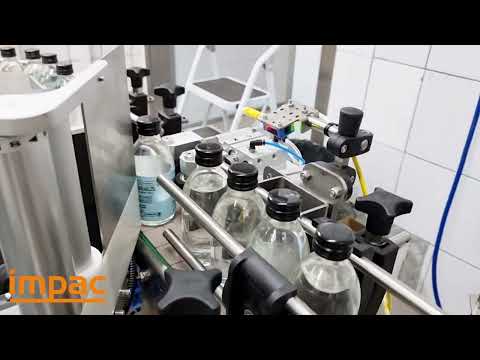
Impac’s liquid filling machine for bottles combines both approaches: a carousel configuration with a linear conveyor, which makes it possible to place work stations both around the carousel and along the conveyor, at an output of 5,000 to 60,000 containers per shift. It is suitable for liquids, semi-liquids and foams, and among its applications are filling, capping, chocolate, oil and chemicals.
What is examined when defining a filling machine for an existing line?
After the selection method has been determined, the filling machine is broken down into the specific details that determine its actual performance. Filling machines are evaluated against the volume of the batch, the number of formats that will pass through the same station, and the downstream operations required immediately after filling, such as splitting, sealing, or label application. The more operations can be performed in a single sequence, the less mechanical transfer of containers between stations is required.
A filling line that combines filling, sealing, and label application in one sequence reduces the mechanical transfer between stations, and therefore it is worth defining in advance which stations are included in it. An automatic filling machine purchased without downstream stations leaves the handling gap to manual treatment, and this is reflected in throughput rather than in detail.
Another consideration is cleaning. Different products require different wash volumes, and wash time is counted directly in the production calculations for a filling line that sometimes switches products frequently. A machine designed for convenient disassembly and reassembly returns part of this time to production, and this is a consideration worth raising in the specification, not after installation.
In practice, both selection methods appear in the catalog alongside different machine configurations and different numbers of workstations. Therefore, the decision on volumetric filling or weighing-based filling is the first in the sequence, not the only decision.
In addition, it is worth checking how many of the parameters are kept as standard in the control system. The more settings are loaded automatically and the fewer are set manually, the shorter the changeover between products and the less it depends on the operator on shift. This is true for both methods, but it is especially noticeable in a line that changes products very frequently.
Another question that arises in specification is what happens when a new product is added to an existing filling line. Filling machines that were designed around a wide range of products and containers can absorb such an addition within the range, whereas a machine designed for a single product may require additional components. It is worth raising this question early, because the answer affects the specification and not only the price.
Volumetric and weigh-based filling machines are available in fully automatic and semi-automatic versions. Thus, the specification divides into three separate questions: which mechanism is suitable for the product, which level of automation is appropriate for the production rate, and which machine configuration is suitable for the existing line.
Summary
The choice between a volumetric filling machine and a weighing filling machine is determined first by the stability of the product’s properties, and then by the type of container, throughput, and frequency of changeovers. A stable product is suitable for volumetric filling; a product whose properties vary is suitable for weighing, and a line that frequently changes products can also benefit from the weighing method during set-up. Contact the Impac engineering team with your product and container data, and receive a characterization of the weighing method best suited to your line.